CHAPTER 4
Checking sources
Check identities, revisions and quoted passages, and see why an existing quotation does not prove a statement true.
python3 run.py --chapter 4
SWIFT · JARVIS · VELIA
A real experience, from the idea to the first executable loop.
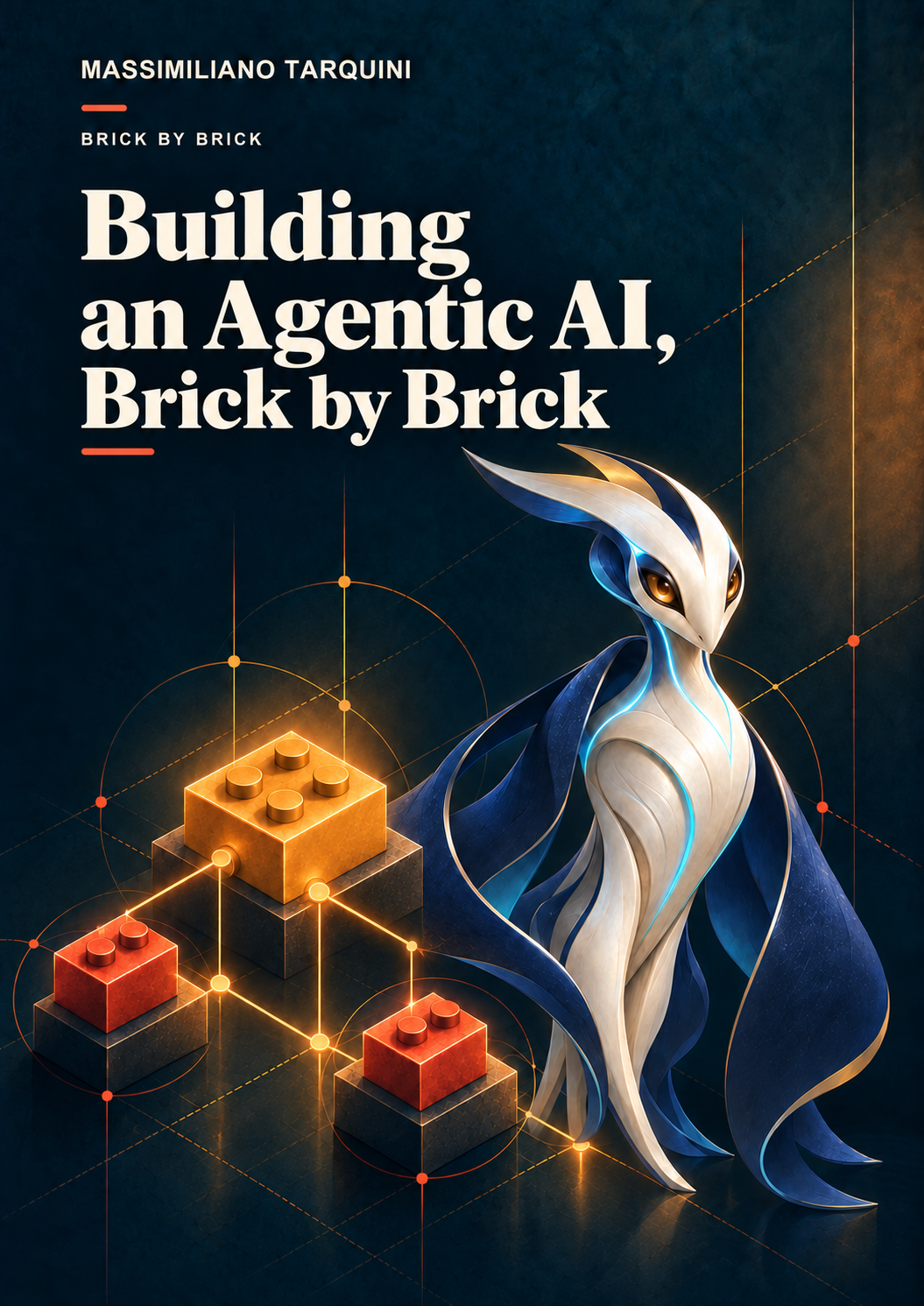
Velia is the assistant I am building in the Jarvis project. The book follows the questions and decisions behind that work: how to distinguish a model from a system that uses tools, how to divide responsibilities in code, and how to check that a result belongs to the work in progress.
FIRST COLLECTION · ENGLISH PDF
· 107 pages · PDF 6.1 MB
A reading draft of a book in progress. Further releases will extend the journey; this collection reaches the first loop with local tools and prepared responses.
Download the first part ↓The book and laboratory instructions are in English. Executable identifiers and fixture strings retain their original spelling.
THE JOURNEY IN THIS RELEASE
The introduction retains the personal journey and scientific foundations behind the book, connecting them to Velia. The opening chapters clarify what we want to achieve; the following chapters bring separate components, conversation state, streamed responses and controlled tool use into Swift.
The collection also includes figures, exercises, explained solutions and a glossary. Memory, tools and skills — reusable instructions for a task — belong to the wider journey; future releases will develop their mechanisms as Velia evolves.
FROM THE BOOK TO THE TERMINAL
The laboratories for chapters 4–8 isolate one problem at a time. They use small documents and prepared responses so you can observe the same behaviour and change its conditions. You need macOS, Python 3.10 or later, Swift 6 and Swift Package Manager, the tool that builds Swift modules.
No credentials, paid model or Jarvis application are required. These experiments check the mechanisms described; they do not measure model quality or the reliability of the complete Velia system.
Download the five laboratories · ZIP ↓67 KB · Swift sources, instructions and prepared inputs
CHAPTER 4
Check identities, revisions and quoted passages, and see why an existing quotation does not prove a statement true.
python3 run.py --chapter 4
CHAPTER 5
Split contracts, core logic and the program into three modules, then replace in-memory reading with file reading.
python3 run.py --chapter 5
CHAPTER 6
Handle late responses and interruptions without delivering the result to the wrong conversation.
python3 run.py --chapter 6
CHAPTER 7
Reconstruct events from small byte chunks and distinguish a draft from a valid completion.
python3 run.py --chapter 7
CHAPTER 8
Receive a prepared read request, validate it, read a local source and return the observation to the loop.
python3 run.py --chapter 8
The book builds the technical journey; the journal follows individual stages of Velia’s development. You can follow both, distinguishing the educational experiments from capabilities still being built into the product.
Follow Velia in the Lab →For the foundations of language models, you can also read Understanding LLMs; for AI-assisted software development, From Prompt to Software.