AI-assisted development
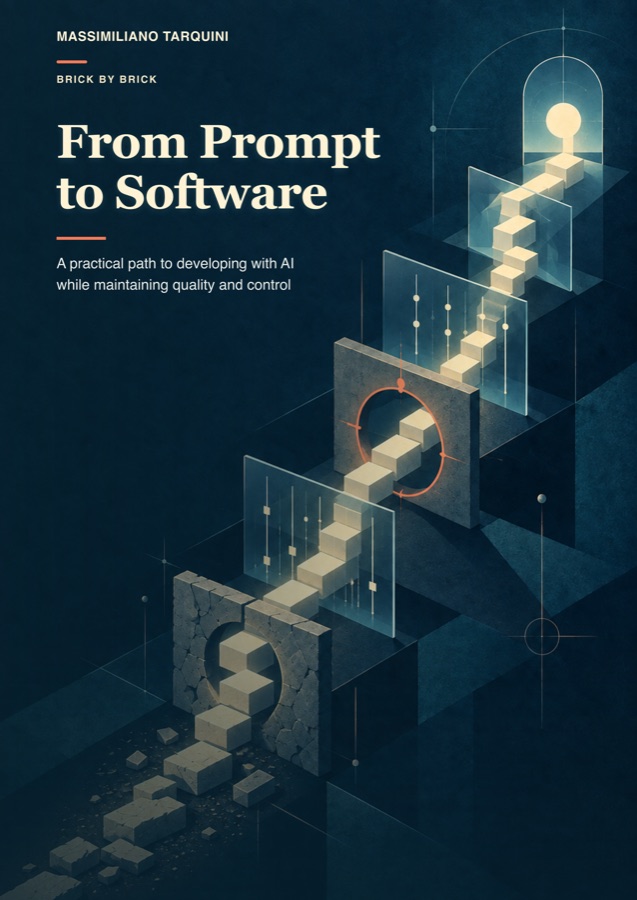
From Prompt to Software — Brick by Brick
A practical path to building with AI while maintaining quality and control
Turn an idea into software we can explain, verify and maintain. The dialogue with AI becomes part of a method.
Explore the contents ↓The next step: reading.
Complete English edition dated 5 October 2026 · 257 pages, with 22 chapters, the continuous Loans tutorial and operational appendices. Editorial review remains open.
PDF · 6.1 MB · English
Download the book ↓You may share and adapt the book for non-commercial purposes, crediting the authors, linking to the licence and identifying changes. See the full licence terms.
THE READING JOURNEY
Table of contents
The book follows the work from the initial need to verifiable software: context and decisions first, implementation next, then evidence and release. The following groups make this journey visible; the titles follow the PDF contents.
From need to design
Define the problem, understand the context and prepare work that can be checked.
- Preface — Where this journey begins
- Reading guide
- 1. Developing with AI while taking responsibility
- 2. Quality as a set of observable properties
- 3. Knowing the project before changing it
- 4. From need to acceptance criteria
- 5. Planning small, reversible increments
- 6. Prompts and conversations for verifiable work
- 7. Design before generating
Build and verify software
Reuse, dependencies, implementation and testing connect to design decisions.
- 8. Reuse before writing
- 9. Dependencies and third-party code
- 10. Provenance of generated, copied, or vendored code
- 11. Implementing through understandable increments
- 12. Backend and frontend as parts of a contract
- 13. Tests as executable specifications
- 14. Code review and independent analysis
- 15. Coverage, test quality and mutation testing
- 16. Quality gates, pipelines and protection of integration
- 17. Security and the supply chain
From evidence to release
Manage debt and audits, take responsibility for the result and continue with the tutorial and operational templates.
- 18. Debt, baselines and controlled exceptions
- 19. Repeatable and traceable technical audit
- 20. From evidence to responsible release
- 21. What if it were Python?
- 22. The code must become ours
- Continuous tutorial — Loans from start to finish
- Operational Appendices
- Glossary
- Annotated bibliography
BEFORE YOU START
A question to start with.
How can we use AI-generated code while staying in control?
The book builds the tools to address this question and recognise the limits of the answers.